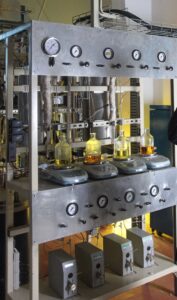

High-pressure reactors, including laboratory autoclaves and bench-scale pressure reactors, are crucial tools in chemical research, process development, and pilot-scale manufacturing. From developing new catalysts to studying fuel chemistry and recycled polymers, these systems allow scientists to investigate reactions under tightly controlled temperature and pressure conditions, enabling accurate, efficient, and safe processing.
A critical component of these systems is the method of liquid delivery. When reagents, solvents, or additives must be introduced into a pressurized vessel with exceptional accuracy, reciprocating piston metering pumps offer a reliable, repeatable solution.
Why Precision Matters
Many high-pressure reactions require reactants to be added gradually rather than charged all at once. Controlling the liquid dosing or reagent feed rate allows researchers to maintain a desired reactant concentration throughout the experiment, helping manage reaction rate, heat generation, and catalyst utilization, and producing more consistent and reproducible results.
Eldex Optos Series reciprocating piston pumps are particularly well suited for these applications, delivering precise fluid metering at flow rates as low as 0.002 mL/min while generating pressures up to 6,000 psi for reliable injection into high-pressure reactors. Their positive-displacement design delivers a precise volume of liquid with every stroke, providing consistent low-flow performance and the pressure required to overcome reactor pressure, while maintaining accurate, reproducible reagent dosing throughout the experiment.
Spotlight on Catalytic Hydrogenation
One of the most common applications of high-pressure reactor systems is catalytic hydrogenation, in which hydrogen gas reacts with organic compounds in the presence of a catalyst to produce desired products. These reactions are widely used in pharmaceutical synthesis, petrochemical research, fine chemical production, and catalyst development.
In many hydrogenation experiments, liquid reactants, solvents, catalysts, or additives must be introduced into a reactor that is already pressurized with hydrogen. Reciprocating piston metering pumps deliver these fluids at a controlled flow rate via continuous reagent addition, enabling researchers to maintain a desired reactant concentration throughout the experiment while promoting stable reaction conditions and consistent catalyst utilization.
For example, a researcher may continuously feed an aromatic solvent or organic substrate into the reactor while monitoring pressure and temperature. In hydrogenation studies, this could include the continuous conversion of benzene to cyclohexane under elevated hydrogen pressure. Accurate, reproducible liquid delivery improves experimental repeatability, provides greater control over reaction kinetics, and increases confidence when scaling laboratory findings to pilot- or production-scale processes.
Beyond Hydrogenation
Precision Reactor Injection is valuable across numerous research and industrial applications, including:
- Polymerization studies and research on recycled polymers require precise monomer dosing.
- Hydrocarbon, petrochemical, and fuel research involving the injection of aromatic compounds or model feedstocks.
- Pharmaceutical synthesis, medicinal chemistry, and API (active pharmaceutical ingredient) development require accurate reagent dosing.
- Biomass conversion, renewable chemicals, and sustainable fuels innovation.
- Materials science, catalyst screening, and reaction optimization require reproducible liquid addition.
While specific chemistry varies from one application to another, the performance requirements placed on the liquid delivery system remain remarkably consistent: accurate, low-flow metering; reliable operation under high reactor pressures; repeatable dosing over extended experimental runs; and precise control of reagent addition. These demands make reciprocating piston metering pumps particularly well suited for high-pressure reactor applications.
Why Reciprocating Piston Pumps Are Well Suited
Compared to many alternative pumping technologies, positive displacement reciprocating piston metering pumps offer several advantages for high-pressure reactor injection:
- Accurate low-flow delivery for laboratory and pilot-scale research down to 0.002mL/min.
- High-pressure capability suitable for demanding reactor environments up to 6000 psi.
- Excellent repeatability over extended operating periods.
- Compatibility with a broad range of solvents, reagents, and process fluids when equipped with appropriate wetted materials
- Automated, continuous dosing that minimizes operator intervention and improves process consistency.
Whether supporting catalytic hydrogenation, hydrocarbon processing, polymerization studies, or emerging sustainable technologies, precise fluid handling is fundamental to obtaining meaningful experimental results.
Reliable Metering for High-Pressure Reactor Injection Applications
At Eldex Corporation, our reciprocating piston metering pumps are engineered to provide dependable, high-pressure liquid dosing and reagent injection for demanding research and industrial applications. By combining robust mechanical design with exceptional metering precision, they help researchers confidently introduce liquids into pressurized reactors where accuracy is critical to success.
Discover the perfect solution for your upcoming high pressure metering needs with Eldex. Contact us now, and let us guide you to the ideal product for your application.
Frequently Asked Questions
What type of pump is used to inject liquid into a high-pressure reactor?
Positive-displacement reciprocating piston metering pumps are commonly used for high-pressure reactor applications because they provide accurate, repeatable liquid dosing at low flow rates while operating at reactor pressures up to 6,000 psi.
Can metering pumps inject liquids into laboratory autoclaves?
Yes. Metering pumps are frequently used with laboratory autoclaves and bench-scale pressure reactors to inject reagents, solvents, catalysts, and additives into pressurized systems while maintaining precise flow control.
Why is precision dosing important in catalytic hydrogenation?
Controlled reagent dosing helps maintain desired reactant concentrations, improve catalyst utilization, manage heat generation, and produce more reproducible reaction results.
What flow rates and pressures can Eldex Optos Series metering pumps achieve?
Eldex Optos Series reciprocating piston metering pumps deliver precise flow rates as low as 0.002 mL/min while generating pressures up to 6,000 psi, making them well suited for demanding high-pressure reactor injection applications.
What applications require high-pressure liquid dosing?
Common applications include catalytic hydrogenation, polymerization studies, pharmaceutical synthesis, API development, hydrocarbon and fuel research, biomass conversion, catalyst screening, and materials science research.